
Andijan
Oldest city in Uzbekistan and birthplace of Mughal emperor Babur.

Andijan (also spelt Andijon and formerly romanized as Andizhan) is a city in Uzbekistan. It is the administrative, economic, and cultural center of Andijan Region. Historically an important city on the Silk Road, it is perhaps best known as the birthplace of Babur, who became the first Mughal emperor.
- location
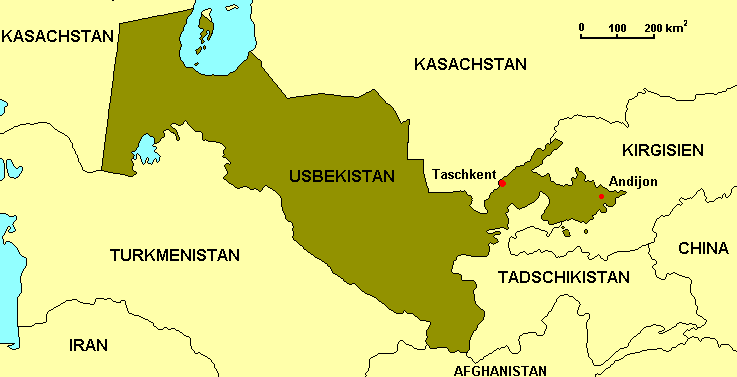
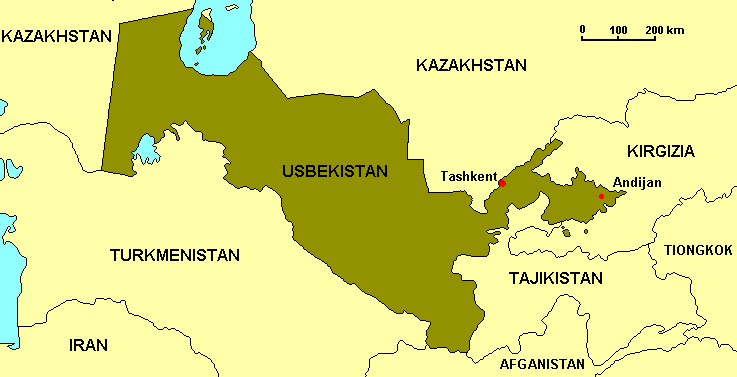
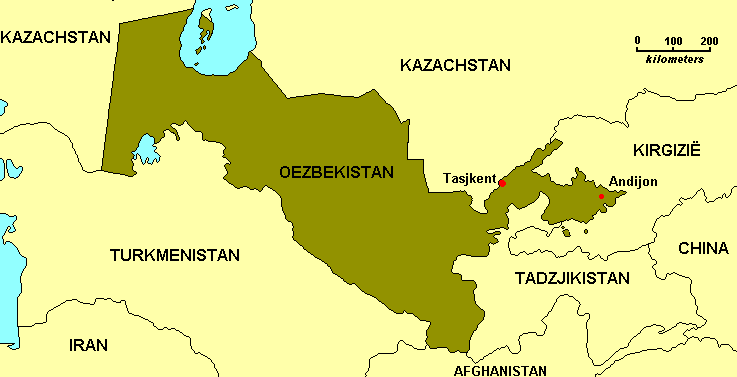
- Uzbekistan, southeastern edge of the Fergana Valley, near border with Kyrgyzstan
- area
- 74 km² (29 sq mi)
Lore & Background
Andijan is one of the oldest cities in the Fergana Valley, with archeological finds dating back to the 7th and 8th centuries B.C.E. It was an important city on the Silk Road. The city is best known as the birthplace of Babur, who after setbacks laid the basis for the Mughal dynasty in the Indian subcontinent and became the first Mughal emperor. After the formation of the Khanate of Kokand in the 18th century, the capital was moved from Andijan to Kokand. The Uzbek government initially stated that the Islamic Movement of Uzbekistan organized the unrest, but critics argue the radical Islamist label was a pretext for repression.
Reader's Guide
Its role on the Silk Road and as the birthplace of Babur, founder of the Mughal dynasty, gives it a prominent place in world history. The city's industrial development during the Soviet era and its manufacture of diverse goods—from chemicals and electronics to furniture and wheelchairs—underscore its economic importance. The city's location in a tense border region at the southeastern edge of the Fergana Valley, near Kyrgyzstan, has contributed to political instability and economic hardship, especially after the fall of the Soviet Union. Andijan's legacy is thus a complex blend of ancient heritage, industrial growth, natural disaster, and political violence.
Did You Know?
- The city's name may derive from the Turkic tribal names Andi and Adoq/Azoq, though its origin is uncertain.
Ancient Roots and Silk Road Legacy
Andijan stands as the oldest city in all of Uzbekistan, with a continuous human presence stretching back more than two and a half millennia. Archaeological excavations in various districts of the city have uncovered artifacts dating to the seventh and eighth centuries before the common era, confirming that settled communities thrived here long before the rise of empires. Its position at the southeastern tip of the Fergana Valley, close to the modern border with Kyrgyzstan, made it a natural waypoint for merchants and travelers moving along the Silk Road, where goods, ideas, and cultures converged for centuries. The city's very name remains a matter of scholarly debate: tenth-century Arab geographers recorded it under variants such as Andukan and Andugan, while a traditional explanation ties it to the Turkic tribal names Andi and Adoq. Though the Khanate of Kokand later shifted its capital away in the eighteenth century, Andijan's role as a crossroads of trade and civilization had already been etched into the landscape of Central Asia.
Birthplace of an Empire
Few cities in Central Asia can claim a connection as consequential to world history as Andijan's link to Zahir ud-din Muhammad Babur. Born in this valley town, Babur endured a long string of military and political setbacks in his homeland before eventually turning his ambitions southward. His ultimate achievement—founding the Mughal dynasty in the Indian subcontinent and becoming its first emperor—remains one of the most transformative episodes in South Asian history, and Andijan is widely regarded as the place where that trajectory began. The city's strategic importance in the region's political life continued well beyond Babur's era. In the eighteenth century it served as the capital of the Khanate of Kokand before the seat of power was relocated to the city of Kokand itself.
The 2005 Massacre and Its Aftermath
The official death toll released by the state stood at one hundred and eighty-seven, yet independent estimates ranged into the several hundreds, and a defector from the State Security Service alleged the figure reached fifteen hundred. Witnesses reported that the bodies of many victims were subsequently concealed in mass graves. In its initial response, the government attributed the unrest to the Islamic Movement of Uzbekistan and to members of Hizb ut-Tahrir, but critics contended that the radical-Islamist framing served merely as a convenient justification for preserving an authoritarian system. The true nature of the event remains fiercely debated: some see it as a preemptive strike to forestall a colour revolution, others as a response to a prison break, and still others as an internal power struggle between rival clans. The Uzbek government ultimately conceded that widespread economic hardship and popular frustration were genuine contributing factors.
Industrial Ambition and Post-Soviet Collapse
The twentieth century reshaped Andijan's economic identity in dramatic fashion. Its factories came to produce a wide array of goods—chemicals, household appliances, electronics, food products, furniture, agricultural plows and pumps, footwear, spare parts for farm machinery, engineering tools, and even wheelchairs. During the Second World War the city also absorbed waves of evacuees, including Jewish refugees fleeing Nazi-occupied Poland. The post-Soviet period, however, brought severe economic contraction.
Gallery
Frequently Asked Questions
What is Andijan?
Andijan is a city in southeastern Uzbekistan that serves as the administrative and cultural hub of Andijan Region. It sits at the southeastern edge of the Fergana Valley, close to the Kyrgyz border.
Why is Andijan historically significant?
As a major Silk Road stop, Andijan hosted traders and travelers for centuries. It is also widely recognized as the birthplace of Babur, the founder of the Mughal Empire in India.
More in Asian Cities 1-24
Elsewhere in the Asian Cities universe
Spotted an error? Know more?
This is a living reference — every entry is fact-audited, and reader corrections feed straight into our audit queue. Suggest an edit · See this site's audit record